Group Assignment - 15 Marks (Same Groups as Assignment 2)
This project aims to give students hands-on experience in:
For this Assignment you will extend assignment 2. This is a group assignment: same group members as in assignment 2.
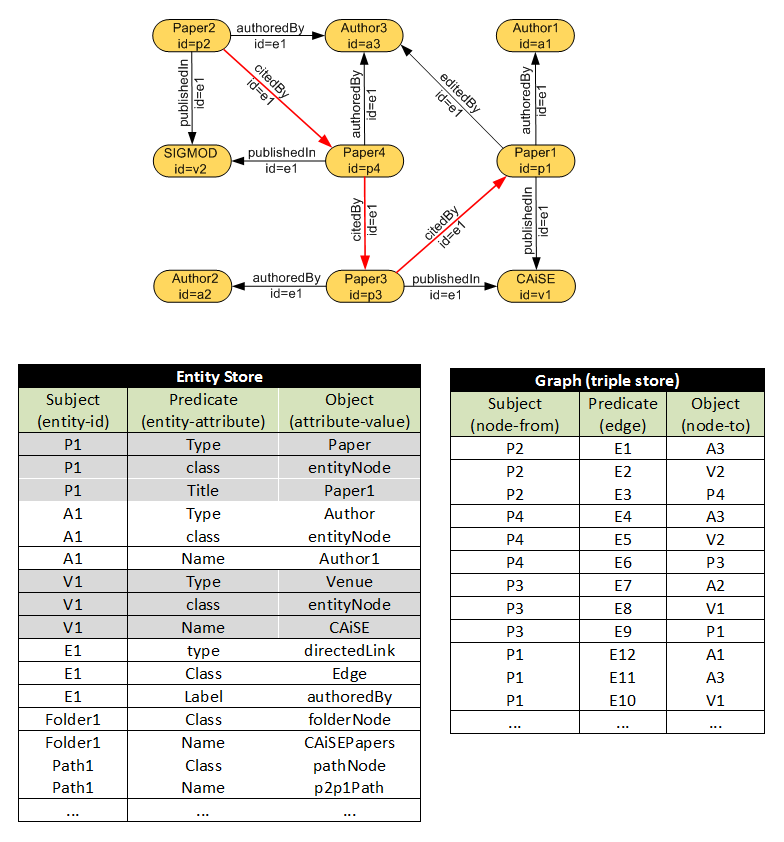
The curation APIs are available as an open source project on GitHub. https://github.com/unsw-cse-soc/Data-curation-API
Please Refere to Assignment 1.
For this part of the assignment, you will need to extract keywords and named entities (similar to assignment 1) from the messages. If the message contains any keywords related to Bullying (e.g. see HERE) then the system admin should recieve a notification (by email and also in the user activity report - see Assignment 2).
We'll consider the Web application developed for Assignment 3. For your simulation, you should consider the following scenarios in the order listed below:
There should be a delay of 5 seconds between each user action.
The Client-Side round trip time/response time for executing the operation: Use JMeter to simulate user interaction and experiment with 5,10,20,25,40,50,75,80,100,200 users and so on with one minute as ramp-up period. If your webapp can handle 200 users in 1 minute, increase the number of users in steps of 200 until the median response time suffers and increases to a large extent (up to 3 times the normal response time).
(Note: If you don't see the response times increasing, then your container may be dropping requests. Look at the error rate in Jmeter. Stop the test if the error rate is > 2%)
For each set of users, note the median response time and the 90-percentile response time in JMeter. Draw a graph using with these response times on y-axis and number of users on x-axis on a log-scale.
(NB1: Important Restart the application between each test/set of users)
(NB2: Important Always load the application in a browser before starting a test. The first request takes the longest time and it biases your results.)
You can use the lab machines or your own laptops to do the performance analysis. Most importantly, you must run JMeter and your application on separate machines .
Each group should create a report with the following sections:
The report should be in Arial 11 pt. with headings in Arial 12 pt. bold with 1 inch margins on all sides. A template is given here. Latex users can use Helvetica or Arial package. Please stick to this format . It is expected that the report would have upto 10 pages, though it will be judged on content and not on length. The report must be submitted as a PDF file.
The third part of the assignment aim to give students the confident to present their technical as well as teaching capabilities. Each group will release the solution to the second/third assignment by preparing a video with a full walk-through. The video should be uploaded on the youtube. You should use the lecture's first slide and add you group member's name there. This slide will be shown in the begining of the video. The best video will be added to the course material, under the assignment section.
NOTICE: The first slide on the video should have the similar format to THIS VIDEO.
The due date for this assignment is (end of Week 12), Sunday, Oct 22 2017, 23:59:59.
DEMO: Demo will be held during the lab times in week 13. You should use the same .war file that you submitted for your demo. Each demo will be around 10-15 mins long.
To: unsw.cse.comp9321@gmail.com
CC: All your group members
From: [Your unsw email address]
Subject: COMP9321-Ass3-S2_17
Body:
  [group id]
  For-each Group member: [Student Number]-[Student Name]
This assignment is worth 15 marks and will be marked as shown above (part1: 5 marks, part2: 3 marks, part3: 4 marks, and part 4: 3 marks). There will be no other marking guide supplied for this assignment.
Here is an example of an excellent report that was produced from one of the previous semester. (Obviously, their test-cases and requirements were different from what is asked here, but they provided an in-depth analysis of their application.)
Please use the message board for resolving doubts.